When to replace your tyres
How to check tread, age and damage at home, the legal minimum tread in South Australia, and the signs a tyre is finished even though it still has tread.
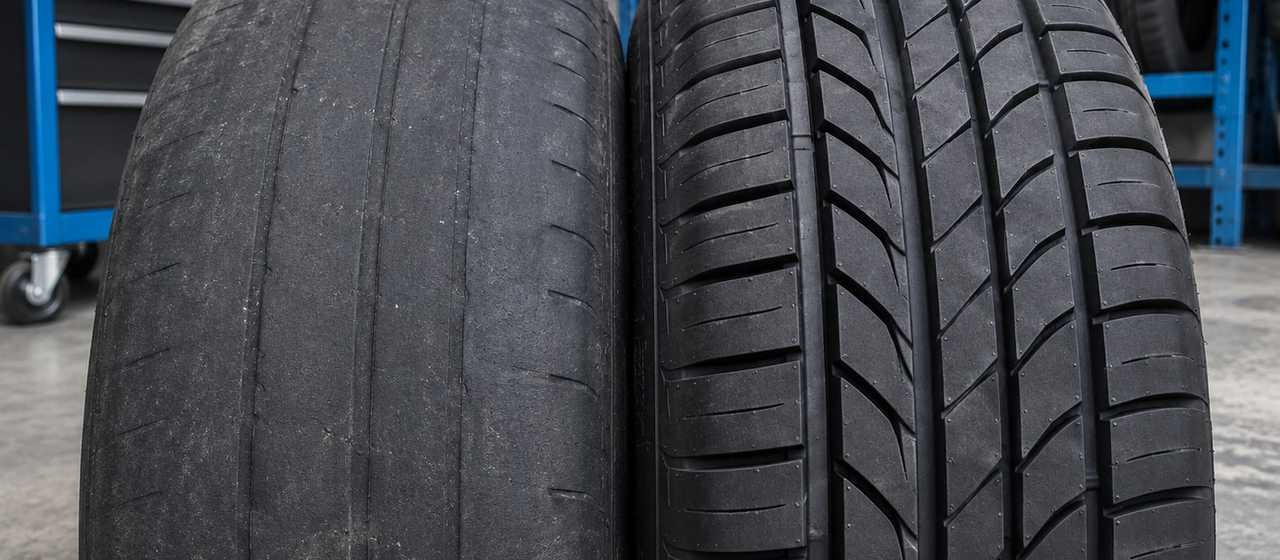
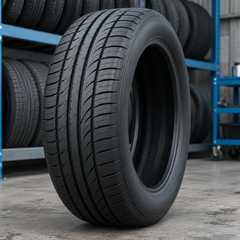
The short answer. Replace a tyre when the tread is worn level with the wear bars in its grooves, when the rubber is cracked, cut or bulging, or when the tyre is ten years old. If you drive a lot in the wet, don’t wait for the wear bars.
Check the tread
The grooves in a tyre are there to move water out from under it. As they wear shallower, the tyre has less grip in the wet.
You don’t need a gauge to see where you are. Tyres have tread wear indicators: small bars moulded across the bottom of the main grooves, usually 1.6 mm high. In South Australia a tyre is unroadworthy once its tread has worn down to any of those bars. A tyre without wear bars needs at least 1.5 mm of tread on every part that touches the road.
Look in more than one place. Check the inside edge, the middle and the outside edge, then roll the car forward half a turn and look again. A tyre can be fine in the middle and bald on an edge you can’t see from the kerb.
The legal limit is a minimum, not a target. RAA recommends changing your tyres when the tread gets to about 3 mm.
Check the age
Rubber hardens and cracks as it ages, whether the tyre is driven on or not. A trailer, a caravan or a weekend car can have plenty of tread on tyres that are past it.
Every tyre carries its date of manufacture on the sidewall. Find the serial that starts with DOT and read its last four digits. The first two are the week and the last two are the year, so 2319 means the 23rd week of 2019.
Bridgestone’s advice is to have tyres checked by an expert at least once a year once they are more than five years old, and to take them off the car at ten years, whatever they look like.
Look for damage
Have the tyre looked at before you keep driving on it if you find any of these:
- A bulge or a blister in the sidewall.
- A cut or a crack deep enough to show the cords underneath.
- Fine cracks spreading across the sidewall or between the tread blocks.
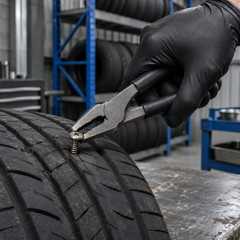
- A nail or a screw in the tread. This one can often be repaired, if it’s caught before the tyre is driven on flat.
Read the wear pattern
How a tyre wore out tells you why.
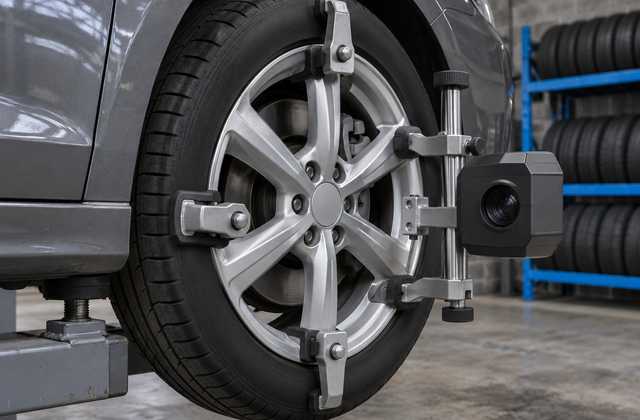
If the inner or the outer edge is worn and the rest still has tread, that points to the wheel alignment. Put new tyres on without fixing it and they’ll go the same way. See how to tell when your car needs a wheel alignment.
Match what the car was built for
Your car has a tyre placard, usually in the glove box, in the engine bay or on a door pillar. It lists the tyre sizes, load capacity, speed rating and pressures the maker recommends.
In South Australia replacement tyres must be able to carry at least the lowest load rating on the placard, and both tyres on an axle must be the same size and construction. The size, the load index and the speed rating are all in the code on your sidewall, so the simplest way to match them is to send us that whole line.
Get a price
Read the size off the sidewall (the tyre size guide shows you how) and text it to 0411 962 842. Our tyre prices include fitting and balancing, and we can dispose of the old set at the shop.
Sources
- SA Government, Cars: vehicle standards and modifications. Tread depth, wear indicators, the tyre placard, load ratings and tyres on the same axle.
- RAA, The troubling tyre question tripping people up. The height of the wear bars and the 3 mm recommendation.
- Bridgestone Australia, Tyre age explained. The date code and the five- and ten-year advice.
- RAA, Does your car need a wheel alignment? Wear on one edge.
All read on 16 November 2026.
Rather just ask?
Text your tyre size or a photo of the tyre and we'll tell you what we'd do.
Text for a priceOr call 0411 962 842